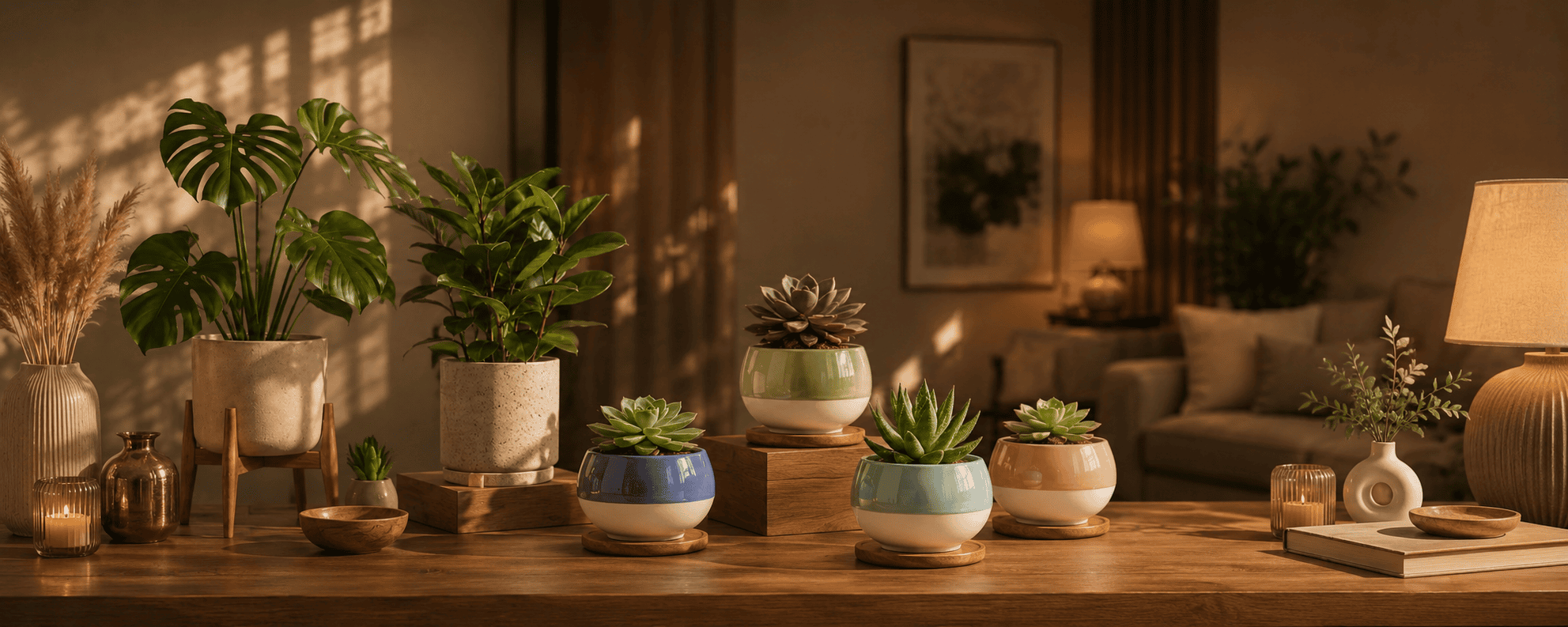
Indoor Plant Care 101: A Beginner's Guide to Keeping Your Plants Alive and Thriving
So you brought a plant home — now what? Plant care isn’t complicated once you understand the basics, but a few common mistakes are responsible for almost every plant death. This guide breaks down exactly what your plant needs, in plain language, so you can skip the trial and error.
1. Watering: Less Often Than You Think
Overwatering is the single biggest killer of houseplants — more common than people simply forgetting to water.
How to check if your plant needs water:
- Stick a finger about 2 inches into the soil.
- If it feels dry, water thoroughly until it drains from the bottom.
- If it’s still damp, wait a few more days and check again.
General watering frequency:
- Succulents & cacti: Every 2–3 weeks
- Snake plants & ZZ plants: Every 2–3 weeks
- Pothos, philodendron, peace lily: Once a week
- Ferns & calatheas: 2–3 times a week (they like consistent moisture)
Golden rule: Always let excess water drain out completely. A planter with proper drainage (or a nursery pot placed inside a decorative one) prevents root rot before it starts.
2. Light: Match the Plant to the Right Spot
Every plant has a light preference, and putting it in the wrong spot is the second most common cause of plant struggles.
- Yellowing leaves + leggy growth = usually too little light
- Scorched, brown, crispy patches = usually too much direct sun
If you’re not sure how much light your plant is getting, rotate it closer to a window for a week and watch how it responds before making a permanent move.
3. Humidity: Recreate Their Natural Habitat
Many popular houseplants (ferns, calatheas, monsteras) originally come from humid, tropical environments. Dry indoor air, especially with AC or heating running, can cause crispy leaf tips.
Easy ways to boost humidity:
- Group plants together — they naturally create a more humid microclimate.
- Mist leaves 2–3 times a week (for tropical varieties only, not succulents).
- Place a small tray of water and pebbles beneath the pot.
4. Feeding: Less Is More
Plants don’t need fertilizer year-round. Feed during the growing season (spring and summer) once every 4–6 weeks with a diluted liquid fertilizer. In fall and winter, most plants go semi-dormant and don’t need feeding at all.
5. Repotting: When and How
Signs it’s time to repot:
- Roots growing out of the drainage hole
- Water runs straight through without being absorbed
- Growth has visibly slowed despite good care
How to repot:
- Choose a planter 1–2 inches larger in diameter than the current one.
- Gently loosen the root ball and remove old, compacted soil.
- Add fresh potting mix suited to the plant type (well-draining for succulents, moisture-retentive for tropicals).
- Water lightly after repotting and keep out of direct sun for a few days to reduce shock.
6. Common Beginner Mistakes to Avoid
- Watering on a fixed schedule instead of checking the soil first
- Using a planter with no drainage — a leading cause of root rot
- Placing sun-loving plants in dark corners for aesthetics
- Repotting immediately after bringing a plant home — let it adjust for 1–2 weeks first
- Ignoring pests like spider mites or mealybugs until they spread
Building a Low-Maintenance Plant Routine
If you’re just starting out, begin with resilient plants that forgive occasional mistakes — snake plants, ZZ plants, and pothos are ideal for beginners. As your confidence grows, you can move on to slightly more demanding plants like calatheas or fiddle leaf figs.
Give Your Plants the Best Start
The right planter — with proper drainage and the correct size — solves half of these problems before they even begin. That’s why every plant and planter set at Lux Leaf is matched intentionally, not randomly.
👉 <a href=”https://luxeleaf.digitalanjali.in/shop/”>Explore our full collection of plants and planters</a> and find low-maintenance options perfect for beginners.
Looking for space-saving options? Our <a href=”https://luxeleaf.digitalanjali.in/product-category/hanging-planters/”>Hanging Planters</a> are a great next step once you’ve got the basics down.